
Wednesday, November 9, 2016

Saturday, November 5, 2016
New publications from John Freeman
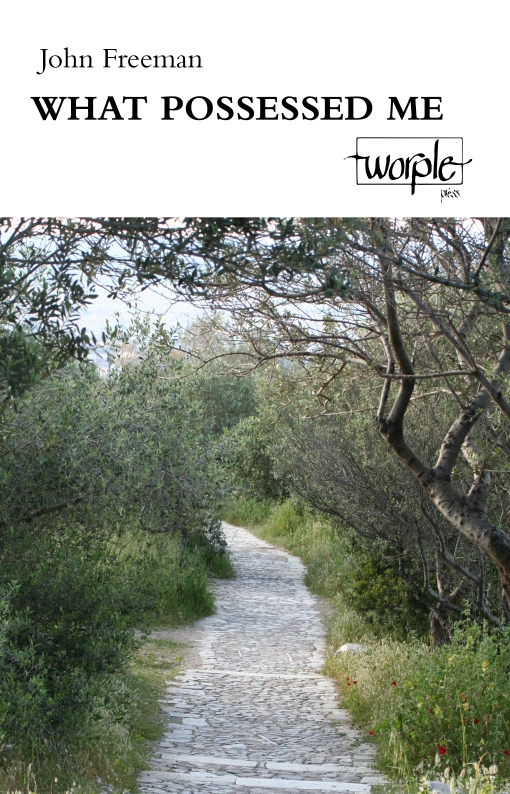
I have taken great pleasure in the last week reading two new publications from John Freeman, whose excellent collection of prose poems, White Wings, I reviewed a while back. Now retired from his teaching post at the University of Cardiff, John has clearly entered a highly productive phase, with a chunky new collection from Worple and a pamphlet just out from Knives, Forks and Spoons.
The pamphlet, Strata Smith and the Anthropocene, mixes prose poetry, verse and essayistic fragment to address the legacy of William Smith, the founding father of geology, whose 1815 map surveyed and classified the various geological strata to be found in the British Isles. The texts deftly interconnect Smith's life story, the poet's investigation of that life and our shared ecological predicament, expressing genuine admiration for Smith while not losing sight of the wider historical and political ramifications of his work. To me, this felt like a taster of what could be a longer account, although the pamphlet stands up very well on its own terms. I can certainly recommend both books.
Saturday, October 29, 2016
Guest Poet - Stewart Carswell
 Over the past couple of weeks, I’ve attended some excellent events at Bristol Poetry Festival, including a reading featuring Stewart Carswell, a young poet and a fascinating new voice. I first encountered Stewart when we attended the same Poetry School course a few years ago. He was living in Bristol while he studied for his PhD in physics and was, amazingly, managing to combine this with his writing life. He was included in Eyewear’s Best New British and Irish Poets anthology this year and they were so enthusiastic about this work that they have now published his first pamphlet, Knots and Branches, which reflects both Stewart’s interest in the natural world and his strong sense of place.
Stewart has kindly agreed for me to publish the poem ‘Instructions for Winter’ here, with the following words of his own commentary. Stewart writes:
'As a poet with a scientific background, I'm quite often asked how I got into poetry. To most people, poetry and science seem to be two very different disciplines. But I would say that they're actually quite similar.
Typically with science research, the procedure is that you make an observation of something interesting, and you try to understand what is happening. You then communicate what happened in a way that people can understand, often using equations where letters are symbols representing properties of the system you observed.
It's the same with poetry, I try and communicate my observations and thoughts concisely through the symbols of poetic imagery. On the surface, the poems may be short and simple, but underneath they are communicating something deeper and more complex through those symbols. I think it is important to make the poems accessible, in order to share the knowledge with a wide audience.
Research is a series of experiments, a journey to find out something unknown. The process of writing is a little like finding out what is inside yourself.
This poem, Instructions for winter, looks a simple one. I wrote it I think at the start of a winter, or at least it was the first snow of the season. I was walking home through those gentle flakes. The movement of the walk moved me physically, and the falling of the snow moved me emotionally. I wanted to combine those movements, while illuminating something about poetry and observation at the same time.'
Instructions for Winter
If the snow is still falling as you read this
then stop reading and go outside.
Go outside: feel the snow melt upon you.
Some things are not meant to last
and this moment is one of them.
Go outside.
Let the snow do its falling and melting,
stay until the moment has changed you
but don’t forget: when you return,
this poem will also be different.
This poem was first published in Sarasvati.
Monday, October 24, 2016
Poetry, Left and Right
Recently, my contributor copy of the New Boots and Pantisocracies anthology plopped through my letter-box. It is a good-looking book, with many startling poems by some of the best contemporary British poets, engaging in sometimes angry, sometimes oblique fashion with the outcome of the 2015 general election; an election which, as we all know, has had untold ramifications, setting the country on the path to Brexit.
Sheenagh Pugh has quite rightly raised the question of the apparent political homogeneity of the work offered here, and of that submitted to the original (and ongoing) blog that gave the anthology its name. As W.N. Herbert says in his introduction, it is (or has become) an avowedly left-wing project; and, indeed, is published by Smokestack Books, who specialise in publishing work in that tradition. That in itself is not a problem for the book, of course, but Pugh and others have worried why such consensus reigns in the world of poetry; or, at least, appears to.
In one discussion I noticed on-line, a poet who is not included in the anthology, and who clearly doesn't share its political leanings, has argued that this left consensus among poets is a reason why poetry is alienated from a public he considers to be made up of a majority of conservatives. On a number of levels, this seems rather tenuous. Plenty of contemporary poetry, even by those who are part of this alleged left-liberal cabal, is not overtly political, or is perhaps at most vaguely humanistic. There are plenty of other reasons why people are not interested in poetry, which have nothing to do with its ideological content. Nevertheless, this does leave us with the slightly embarrassing question of why there is so little political diversity to be found, not just in the New Boots anthology, but in contemporary British poetry more widely.
The problem, I think, has to do with the nature of the contemporary politics more than with contemporary poetics. Quite simply, the dominant political ideology of our time makes the adoption of what we might call a conservative position in poetry a vexed undertaking. Our on-line commentator, who finds it problematic that poets don't represent the views of the alleged majority, is wrong-headed in a number of respects, not the least of which is to assume that voting preferences actually tally with the views that voters hold on particular issues (that link is not as strong as commonly imagined). Yet the chief misconception here is to assume that it is the function of art to reflect back to 'the majority' what it already (thinks it) thinks. This is a dubious assumption, even leaving aside the fact that there are plenty of other social institutions already doing this job quite efficiently. There is ultimately something authoritarian about it, as if the only thought that should be expressed is the kind that everyone can agree on and that will trouble nobody.
The point about poetry, or art in general, is that it is not affirmative of the status quo. This does not mean that it cannot affirm something (the beauty of nature, the value of human relationships, etc.), but it does so in a context in which those things it affirms are not to be taken for granted or are fragile and threatened. Poetry is a response to a world that is not as it should be (when was the world ever as it should be?) and is a corrective to those who peddle the notion that everything is in its right place. This certainly leaves room for conservative or right-wing writers (understood here as a very broad category), as the likes of Eliot, Pound, Benn, Hamsun, Celine, Nietzsche, Waugh, or, today, Houellebecq demonstrate (I'm not going to draw any conclusions here about my inability to name an example of a female writer. This is probably my ignorance. For reasons that will become clear, I don't think Ayn Rand really fits). However, what links these writers is their relationship to progress, or what their contemporaries consider as such. The writer of the right, or the conservative writer, is the writer railing against what everybody else consider to be the great advances of their time. All of those things the left tends to think are inherently progressive (technology, democracy, cosmopolitanism, equality, materialism, humanism, etc.) are held up to scrutiny by the literary right, which looks back to the values of a world (very possibly of their own retrospective construction) that is being bulldozed by a new form of society that they abhor. The left's relationship to progress is perhaps more straightforward: They think progress is a good thing, just not the kind of progress we are getting now. Their writing is against a variety of progress, not against progress itself.
In the prevailing ideological climate, the position of the left-liberal poet is clearly easier to negotiate. If we restrict our view to the UK for the moment, we are currently witnessing the dominance of an ideology that calls itself conservative or invokes the position of conservatism, as in the case of UKIP and its demand to 'get our country back'. However, this 'conservatism' is an ideological smoke-screen for a brand of neo-liberalism that worships the 'creative destruction' brought about by increasingly restless flows of global capital and rejects any impediment to such flows as they tear down borders, uproot ways of life and trash the global environment. This is not a conservative project, but a revolutionary one, yoked to a notion of progress that has increasingly lost sight of the needs of individuals and communities in favour of the needs of corporations and their shareholders. Frankly, conservatives should be in up in arms about it. This would, surely, be a position from which to write, but one looks in vain for British poets who can take up this tradition. Where they do exist, they seem to fall into the trap of endless attacks on the 'liberal intelligentsia'. Not that that this intelligentsia doesn't deserve and need critical scrutiny, but at the moment this seems to me to be largely an excuse for not addressing the real nub of the problem, which is the nature of the contemporary capitalist system, from a conservative standpoint.
Conservative writers of the twentieth century recognised that the society that capitalism had created was the target of their critique – they just formulated a different kind of critique to that proposed by the left. The fact that conservative writers, if they exist outside the pages of the opinion columns in the tabloid press, fail to rise to recognise this today, must surely be due to the ideological confusion that has been brought about by the importation of neo-liberal ideology into British politics. Free-marketers have found no ruse more effective for selling their project than to drape it in the colours of reactionary cultural conservatism. While UKIP and the Conservative Party strive for a society of the market, dreaming of a future UK as a kind of new Singapore off the European coast, they promise the electorate that such a society will return them to a culturally homogeneous, insular world of national sovereignty, when exactly the opposite is the case. For truly successful conservative writers to emerge, I would argue, this is what they would have to write against, not just against the 'left-liberal elite', which is (let's face it) by far the lesser threat to the things conservatives (in the true sense of the term) hold dear. That we do not have such writers is an impoverishment, even if I would have to spend a lot of my time radically disagreeing with them about almost everything.
Sheenagh Pugh has quite rightly raised the question of the apparent political homogeneity of the work offered here, and of that submitted to the original (and ongoing) blog that gave the anthology its name. As W.N. Herbert says in his introduction, it is (or has become) an avowedly left-wing project; and, indeed, is published by Smokestack Books, who specialise in publishing work in that tradition. That in itself is not a problem for the book, of course, but Pugh and others have worried why such consensus reigns in the world of poetry; or, at least, appears to.
 |
| Public Writer, Jean Jacques de Boissieu, 1790, Metropolitan Museum of Art |
In one discussion I noticed on-line, a poet who is not included in the anthology, and who clearly doesn't share its political leanings, has argued that this left consensus among poets is a reason why poetry is alienated from a public he considers to be made up of a majority of conservatives. On a number of levels, this seems rather tenuous. Plenty of contemporary poetry, even by those who are part of this alleged left-liberal cabal, is not overtly political, or is perhaps at most vaguely humanistic. There are plenty of other reasons why people are not interested in poetry, which have nothing to do with its ideological content. Nevertheless, this does leave us with the slightly embarrassing question of why there is so little political diversity to be found, not just in the New Boots anthology, but in contemporary British poetry more widely.
The problem, I think, has to do with the nature of the contemporary politics more than with contemporary poetics. Quite simply, the dominant political ideology of our time makes the adoption of what we might call a conservative position in poetry a vexed undertaking. Our on-line commentator, who finds it problematic that poets don't represent the views of the alleged majority, is wrong-headed in a number of respects, not the least of which is to assume that voting preferences actually tally with the views that voters hold on particular issues (that link is not as strong as commonly imagined). Yet the chief misconception here is to assume that it is the function of art to reflect back to 'the majority' what it already (thinks it) thinks. This is a dubious assumption, even leaving aside the fact that there are plenty of other social institutions already doing this job quite efficiently. There is ultimately something authoritarian about it, as if the only thought that should be expressed is the kind that everyone can agree on and that will trouble nobody.
The point about poetry, or art in general, is that it is not affirmative of the status quo. This does not mean that it cannot affirm something (the beauty of nature, the value of human relationships, etc.), but it does so in a context in which those things it affirms are not to be taken for granted or are fragile and threatened. Poetry is a response to a world that is not as it should be (when was the world ever as it should be?) and is a corrective to those who peddle the notion that everything is in its right place. This certainly leaves room for conservative or right-wing writers (understood here as a very broad category), as the likes of Eliot, Pound, Benn, Hamsun, Celine, Nietzsche, Waugh, or, today, Houellebecq demonstrate (I'm not going to draw any conclusions here about my inability to name an example of a female writer. This is probably my ignorance. For reasons that will become clear, I don't think Ayn Rand really fits). However, what links these writers is their relationship to progress, or what their contemporaries consider as such. The writer of the right, or the conservative writer, is the writer railing against what everybody else consider to be the great advances of their time. All of those things the left tends to think are inherently progressive (technology, democracy, cosmopolitanism, equality, materialism, humanism, etc.) are held up to scrutiny by the literary right, which looks back to the values of a world (very possibly of their own retrospective construction) that is being bulldozed by a new form of society that they abhor. The left's relationship to progress is perhaps more straightforward: They think progress is a good thing, just not the kind of progress we are getting now. Their writing is against a variety of progress, not against progress itself.
In the prevailing ideological climate, the position of the left-liberal poet is clearly easier to negotiate. If we restrict our view to the UK for the moment, we are currently witnessing the dominance of an ideology that calls itself conservative or invokes the position of conservatism, as in the case of UKIP and its demand to 'get our country back'. However, this 'conservatism' is an ideological smoke-screen for a brand of neo-liberalism that worships the 'creative destruction' brought about by increasingly restless flows of global capital and rejects any impediment to such flows as they tear down borders, uproot ways of life and trash the global environment. This is not a conservative project, but a revolutionary one, yoked to a notion of progress that has increasingly lost sight of the needs of individuals and communities in favour of the needs of corporations and their shareholders. Frankly, conservatives should be in up in arms about it. This would, surely, be a position from which to write, but one looks in vain for British poets who can take up this tradition. Where they do exist, they seem to fall into the trap of endless attacks on the 'liberal intelligentsia'. Not that that this intelligentsia doesn't deserve and need critical scrutiny, but at the moment this seems to me to be largely an excuse for not addressing the real nub of the problem, which is the nature of the contemporary capitalist system, from a conservative standpoint.
Conservative writers of the twentieth century recognised that the society that capitalism had created was the target of their critique – they just formulated a different kind of critique to that proposed by the left. The fact that conservative writers, if they exist outside the pages of the opinion columns in the tabloid press, fail to rise to recognise this today, must surely be due to the ideological confusion that has been brought about by the importation of neo-liberal ideology into British politics. Free-marketers have found no ruse more effective for selling their project than to drape it in the colours of reactionary cultural conservatism. While UKIP and the Conservative Party strive for a society of the market, dreaming of a future UK as a kind of new Singapore off the European coast, they promise the electorate that such a society will return them to a culturally homogeneous, insular world of national sovereignty, when exactly the opposite is the case. For truly successful conservative writers to emerge, I would argue, this is what they would have to write against, not just against the 'left-liberal elite', which is (let's face it) by far the lesser threat to the things conservatives (in the true sense of the term) hold dear. That we do not have such writers is an impoverishment, even if I would have to spend a lot of my time radically disagreeing with them about almost everything.
Tuesday, September 20, 2016
Unexpected encounters

All of the residencies have been run under the heading of 'Unexpected Encounters' and, to judge from the report back that some of us enjoyed in The One Elm in Stratford last night, they have lived up to this promise. You can check out the hastags #SUAPoetryfestival and #unexpectedencounters on Twitter to see some of the things that have been going on.

I'm fascinated to see what work has emerged from the other residencies. What has struck me most about the residency experience is the role of chance. I made plenty of plans for the residency, and I'm glad I did, but in the end I found myself having to respond to situations and encounters I could never have predicted. Still, without that element of randomness, I would have only written what I expected to write, which would not have been nearly as much fun.
Thursday, September 8, 2016
Autumn, Hotels and Pantisocracy
Logging on to look at my blog, the statistics tell me that my post on Top Ten Autumn Poems is getting hits again. Clearly, when autumn arrives, we cannot help but turn to poetry. My autumn certainly has plenty of poetry in it, with a reading with Cliff Yates at my favourite monthly poetry event Buzzwords on 2nd October and my participation in a very exciting residency with Stratford-upon-Avon Poetry Festival.

For the residency, I will be based for two days at the Billesley Manor Hotel (19-20 September) and will also take part in a reading on 24 September with other poets who have been brought into local businesses to create some 'Unexpected Encounters'.
I'm also hoping to put on a short performance on 'The Poetry of Hotels' while I am at Billesley. You'll be able to find updates on that here and also on my Twitter feed (@davidcchelt).

For the residency, I will be based for two days at the Billesley Manor Hotel (19-20 September) and will also take part in a reading on 24 September with other poets who have been brought into local businesses to create some 'Unexpected Encounters'.
I'm also hoping to put on a short performance on 'The Poetry of Hotels' while I am at Billesley. You'll be able to find updates on that here and also on my Twitter feed (@davidcchelt).
The various residencies at the Festival will contribute to an online publication of poetry produced in Stratford. The link will be posted on this blog as soon as the project is complete.
In other news, four of my poems have just been published in Bare Fiction magazine, which is an outlet I've been wanting to get into for a while. This little magazine packs a real punch, combining fascinating new poetry, drama and fiction in a carefully designed package.
Also on the publications front, the crucible of discontent that is New Boots and Pantisocracies is about to make the transition from the screen to the page with an anthology from radical publishers Smokestack Books. I've just seen the proofs, which include my poem 'In the Snug', and it really is going to be a corker. There is passionate and spiky work here from just about all of my favourite contemporary poets (Sean O'Brien, Rachael Boast, Tony Williams, Helen Mort, Ian Duhig, Ciaran Carson...). Let's hope there is a post-Brexit sequel!
Tuesday, August 2, 2016
The Stanza - A New Course for the Poetry School
After having taught a one-off workshop on-line for the Poetry School earlier this year, I'm very pleased to be returning to teach with this amazing organisation in the autumn of 2016. The topic of this five-session course (running over 10 weeks) will be 'The Stanza'. To promote the course, I've been asked to a write a post over at the Poetry School blog, which you can read here. I hope some of you will consider signing up -- I'll be doing my best to make the course stimulating and productive for all of us.
Thursday, July 14, 2016
What's going on?
In post-Brexit Britain, as political leaders tumble and old certainties are shaken, this is a question I find myself asking more than once every day. In another (non-poetic) guise, I've written about what I think is really going on here, but things are moving so fast, any substantial judgement still seems premature. We can't see history while we're making it, or while others are making it for us.
What does poetry do here? There are a couple of interesting projects up and running where poets respond directly to contemporary events: over at The Fat Damsel and a rejuvenated New Boots and Pantisocracies. I've written a few pieces in this vein myself in the past, as evidenced in part by this blog, but I'm finding that the general atmosphere of upheaval is seeping into my writing in more oblique ways at the moment, so that I don't think I have it in me to write a poem directly in response to current events. Instead, a rather odd and fantastical sequence is emerging with the title Scare Stories, which may or may not see the light of day in due course.
Luckily, I have the distraction of some summer readings to look forward to. July is quite a packed month in this respect.
On Monday 18, I'll be reading at Leicester Shindig, from 19.30, in the company of Claire Walker and others at The Western, 70 Western Road, Leicester LE3 0GA. There's an open mic, so please come along and share your work!

On Friday 22, I'll be reading with other Gloucestershire-based poets at Waterstones Birmingham, courtesy of Cheltenham Poetry Festival (full details below).

On Tuesday 26, I'll be reading with Daniel Sluman at Poetry Bites in Kings Heath, Birmingham (full details here), also including open mic.
On Thursday 28, I'll be reading at Words and Ears in Bradford on Avon with Rachael Clyne (see full details below).

What does poetry do here? There are a couple of interesting projects up and running where poets respond directly to contemporary events: over at The Fat Damsel and a rejuvenated New Boots and Pantisocracies. I've written a few pieces in this vein myself in the past, as evidenced in part by this blog, but I'm finding that the general atmosphere of upheaval is seeping into my writing in more oblique ways at the moment, so that I don't think I have it in me to write a poem directly in response to current events. Instead, a rather odd and fantastical sequence is emerging with the title Scare Stories, which may or may not see the light of day in due course.
Luckily, I have the distraction of some summer readings to look forward to. July is quite a packed month in this respect.
On Monday 18, I'll be reading at Leicester Shindig, from 19.30, in the company of Claire Walker and others at The Western, 70 Western Road, Leicester LE3 0GA. There's an open mic, so please come along and share your work!

On Friday 22, I'll be reading with other Gloucestershire-based poets at Waterstones Birmingham, courtesy of Cheltenham Poetry Festival (full details below).

On Tuesday 26, I'll be reading with Daniel Sluman at Poetry Bites in Kings Heath, Birmingham (full details here), also including open mic.
On Thursday 28, I'll be reading at Words and Ears in Bradford on Avon with Rachael Clyne (see full details below).

Friday, June 3, 2016
Letter from Brussels
 This week I was in the Netherlands and Belgium for my work. With a couple of hours to kill in a rather misty and chill Brussels, I took the retro-futuristic Metro to see the Grande Place and buy truffles for the nearest and dearest. The standard tourist stuff. No time to look at the fine museums or pop into the 'Parlementarium', which is surely what Eurosceptics imagine hell must look like.
There I was, at the heart of what we have come to see as 'Europe' (although its real heart may lie further east these days), thinking of the journey home and the prospect of arriving back in the truly depressing midst of the EU referendum debate, with the looming prospect of Britain's self-isolation from 'the continent'. The old myth of separateness and parochialism is alive and well in this ever-more interconnected world -- a colossal failure of the collective imagination, whatever one thinks of individual EU policies, or even of the apparatus as a whole.
Judy Sutherland has been publishing some lovely, positive Europhile poems over at The Stare's Nest. I recommend you check them out. Below are a few lines of doggerel written on that rainy afternoon in Brussels. They can't match the positivity of the poems Judy Sutherland has posted, I'm afraid.
Letter from Brussels
I call a narrow land my home –
it does not thank me for my hymns.
For want of answers it says NO
and doesn't care what it doesn't know.
Whatever phoney war this might
turn out to be, the last of fight's
gone out of me. The double-dealing
chatter smoothly on, the feeling
offered's like some sticky hand
you brace yourself to shake. Bland
messiahs packed in spittled suits,
poisoners of the grass-roots.
And here is better? Why not stay?
Today these flatlands, clipped from baize
and duller cloths, are rich enough
for killing over petty stuff –
who speaks how or prays just so,
who may stay and who must go.
Here too, the papers all report
opinions instead of thought.
At least, perhaps, there may be space
to share – a hope we learn to face.
Rarely do we get to choose
the juice in which we will be stewed.
Tuesday, May 3, 2016
Guest Poet: Katherine E. Young
 |
| Katherine E. Young |
One of my most
pleasurable poetry discoveries of recent months has been Katherine E.Young's collection, Day of the Border Guards (University of Arkansas
Press, 2014), a book that addresses the author's long experience of
living and working in the USSR and post-Soviet Russia. Katherine, who
I was lucky enough to meet at a reading she gave in Cheltenham
recently, is also an accomplished translator of Russian verse into
English, and her deep knowledge of and love for Russian literary
culture in particular are a hallmark of this collection. And yet the
tone here is never academic; rather, the poems are constructed around
the lived detail of everyday existence in Russia's past and present,
closely observed, yet never exoticized. I have many personal
favourites in the book, but Katherine has been kind enough to allow
me to showcase the following poem.
Pushkin Museum of
Fine Arts
But how little they
resembled the gods
who wore winged
crowns in allegorical paintings,
those dissidents who
frowned through scotch-taped glasses
and shook their
fingers at my naïveté.
No more than I
resembled Icarus
falling from the
sky, my failures even
more ordinary. What
amazed me then:
the armies of the
everyday who woke
each morning and set
patiently about
making something of
their lives, despite
every conceivable
incentive to do
nothing. Onetime
ploughmen throttled combines,
the torturer’s
chauffeur strained his back
changing a flat,
printers inked metal plates
to print the
newspapers office workers
used to wrap up
fish. On the Koltso,
trucks belched
smoke; and up in space men floated
in expensive
delicate ships and watched
the earth in blue
radiance whirling away.
Of 'Pushkin Museum
of Fine Arts', Katherine writes:

The American poets
who get a hearing on this side of the Atlantic are few in number
compared to the productivity of US poetry, and we often rely on UK
publishers to act as gatekeepers, selecting for us the books we will
engage with. Clearly, British poets and readers have much to gain by
looking further afield in the US poetry scene. In that spirit, I can
wholeheartedly recommend Katherine's book, which can be ordered inthe UK.
Subscribe to:
Posts (Atom)