Sunday, June 14, 2015

Desire

This is, I realize, a post I would do better not to write, given the outrage surrounding this issue. But something has disturbed me about the recent kerfuffle over Craig Raine's poem Gatwick, published in the London Review of Books. I would not say it is an excellent or even a good poem, but it is a poem about desire, and about a kind of desire that many find unpalatable.
At about the same time as the controversy emerged, I was reviewing a pamphlet by a young male poet. It features a poem about a young man looking at a beautiful woman at a bus stop and fantasizing about her being drenched in milk from one of the bottles in her shopping bag. It is certainly a poem in which the 'male gaze' is the organizing element, but - given the fact that the poet and the poem are not well known - I think it is unlikely that it will cause a stir. The poem in question is probably no more voyeuristic than Raine's, but the poet does not have, or is not perceived to have Raine's power.
In the on-line debate, much has been made of the fact that the poem was published by LRB, one of the country's most prestigious literary outlets. Raine once had a well-paid academic position in an Oxford college and is now an emeritus professor. He has edited poetry for Faber and Faber and The New Statesman and published his own collections with major publishers. We do have to overlook the fact that he comes from a background that was far from privileged, but it is certainly easy to see him as a member of the male-dominated cultural establishment. The chummy reference to Tom Stoppard's sale of a holiday home in France in the poem's opening stanza doesn't help, let's face it.
The on-line criticism of Raine, as opposed to the articles in the mainstream press (including this one by Sophie Hannah), focuses sharply on his position of power as an older man within the literature industry who is perpetuating disempowering images of women in a privileged outlet that would not be available to, say, the young woman in the poem. This is especially poignant given that, from the little we know of her, she may well have literary ambitions of her own. While she is condemned to a life of drudgery in passport control, Raine gets to ogle her, publish his bad poem about the ogling, and get paid for it. It would certainly have been a better poem if Raine had been able to see and address this uncomfortable reality. Charles Whalley is right, therefore, to conclude that there is nothing 'subversive' about it.
Passengers with luggage looking at arriving-flights board
Gatwick Aiport (Image: Wikipedia)
He falls short here in comparison with a poet like Frederick Seidel: Seidel is economically and culturally privileged by anyone's standards, and is unflinching in his depictions of his own lifestyle, which seems to feature a lot of recreational sex and very expensive motorbikes. However, his poetry is, it seems to me, driven my an over-riding impulse to see things and show things as they are. Seidel says to the reader, Look at this!, and has no comforting moral resolution for us to take away with us.
There is something of this impulse in Raine's poem, I think. He does reflect upon his own position as a particular kind of desiring subject in a particular social position, and to an extent contrasts this with that of the young woman at passport control. However, as Matthew Lyons suggests, he doesn't go nearly far enough in exposing the dynamics of that social and economic relationship. He is too eager to return to ruminations on his own desire and the sayability or unsayability of that desire. Given the poem's place of publication, as many have pointed out, this doesn't look like a particularly compelling question, and leaves aside the ultimately more interesting ideas he fails to fully develop.
So, why does the negative reaction to Raine worry me? It worries me because, alongside the pertinent criticism that has certainly been formulated, there seems to be an underlying implication that people like Raine should not talk about this sort of thing. There seems to be a suggestion in some of the contributions that only the (relatively) powerless can talk about desire, and that an educated, prosperous and established poet doing so is inherently 'pervy' or 'creepy'. We may well have heard enough about this kind of male desire: that would be a fair point. However, poetry should be able to talk about anything, honestly and at times uncomfortably, whoever is writing it. We can certainly criticize Raine for failing to see clearly the situation he seeks to explore in all of its disturbing ramifications, but we should be careful before we start ruling particular subject matter off-limits for anyone.

Monday, May 4, 2015

Listening

Cheltenham Poetry Festival 2015 has been and gone. 10 days of poetry, performance, lectures, music and discussion seem to have passed by in a blur. By the end, everyone involved looked a little tired but certainly happy that the Festival had been such a success. At the last event, we quite rightly gave Anna Saunders and Robin Gilbert, the co-directors of the Festival, a loud and long round of applause for their efforts throughout the year. Without them, it simply wouldn't happen.
There were many highlights I could mention: Sean O'Brien reading from his excellent new collection, The Beautiful Librarians; Sue Rose's moving work on family, love and loss; Jo Bell launching her new book,  Kith; Michael McKimm's subtle and fascinating reflections on geology and climate change; a brilliantly accessible lecture by Stephen James of the University of Bristol on repetition in poetry; Sarah James and Angela Topping presenting their collaborative pamphlet, Hearth... but every event had something different and exciting to offer.

But festivals like this need and deserve an audience. Getting an audience, despite the presence of a wide community of poetry readers and writers in the region, requires a huge amount of effort on the part of the organisers. I wonder if this has something to do with the challenge of being part of that audience. Listening to poetry is not easy. Sitting still for an hour and listening to anything is not easy, frankly, but poetry demands of us that we are completely present, focusing intently on the words spoken to us. We are not a culture which encourages such listening. We are device-distracted and channel-hopping, entertained within an inch of our lives. Poetry does not entertain in the commonly understood sense. However, if we can find the necessary attention to give to it, it can give us pleasure in return; and there surely is a profound pleasure in hearing great work read well, to be caught up in that moment of experiencing poetry. Cheltenham Poetry Festival has offered many such experiences this year, and I'm delighted to hear that the team are already looking forward to 2016.

Thursday, March 26, 2015

What's going on?

At the risk of shameless self-publicity, here are a couple of things that have been happening lately that I wanted to mention. Firstly, in terms of publications, I have a poem in the very interesting anthology Other Countries, featuring poems that re-interpret particular moments in history. My poem is about the Cuban missile crisis as viewed from Lincolnshire. Claire Trevien and Gareth Prior have done a great job editing the anthology and I've already taken part in one of the launch readings. There will be another reading at the forthcoming Cheltenham Poetry Festival.


In other news, Tears in the Fence has published my sequence of five acrostic sonnets based on the early films of Udo Kier. If you asked me what it was really all about, I couldn't tell you, but it was great fun to write, and it is a pleasure to be in this magazine, which remains one of the most interesting small literary magazines in the UK. Apart from the variety and quality of work, I value this magazine because it has introduced me to so many poets beyond the mainstream of British verse who I would otherwise have never encountered.


Finally, my anticipation grows for the launch of my first full collection of poems, Arc, with Nine Arches Press in the autumn. We are at the stage of choosing covers and author photographs, so it all seems very real now. One of the poems from the book, along with something written more recently, has just been published over at Abegail Morley's Poetry Shed blog.

Friday, February 20, 2015

Cheltenham Poetry Festival Preview

Spring in Cheltenham means we can soon look forward to another excellent Cheltenham Poetry Festival. Organised by a team of plucky volunteers, led by the indomitable Anna Saunders, every year they do their magic to create a line-up that's full of surprises and delights, working with little money and lots of enthusiasm.

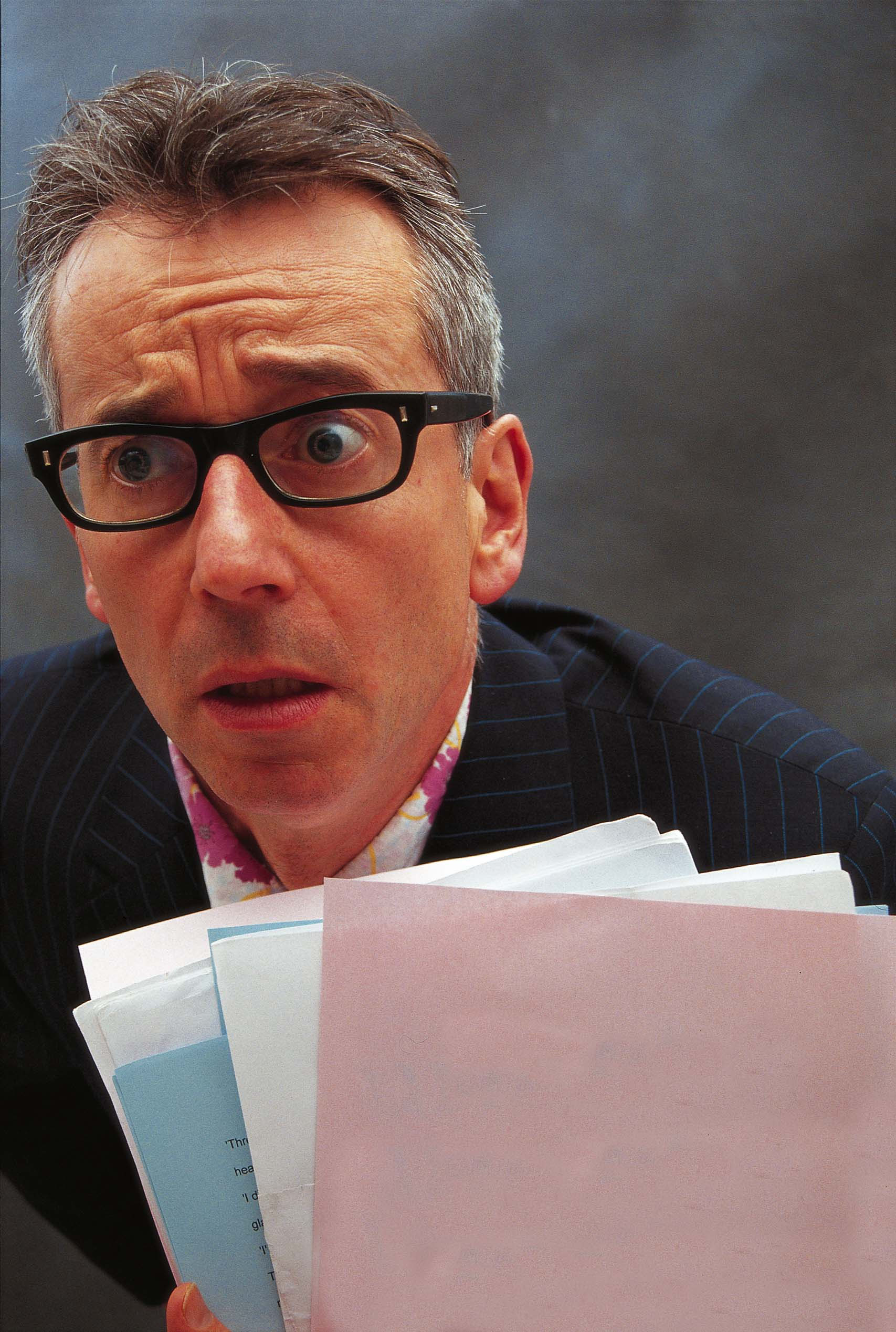
Image from johnhegley.co.uk
To get the ball rolling for the Festival proper, this year features a preview weekend (7/8 March) that has something for everyone. The Playhouse Theatre Cheltenham is hosting the two-day event (full details on p. 6 of their current brochure) and you can book tickets directly from them. Highlights include the surreal poetry and song of John Hegley, the excellent Ann Drysdale and Philip Rush, and the Festival Music Hall. Also, Jennie Farley's all-female Picaresque poetry troupe will be presenting their own work at 11.00 on Saturday at the Wilson Art Gallery, responding to pieces from the collections (Call 01242 237431 to book).

Thursday, January 1, 2015

Things I'm Glad I Read in 2014 #5

Happy New Year! To celebrate, here is the fifth and final instalment in my end-of-year round-up of collections I particularly enjoyed in 2014. Before I begin, and to follow the example of the excellent Dave Coates, a disclaimer is probably necessary. Two of my selections are published by Nine Arches Press. I not only consider Nine Arches to be one of the most interesting small presses around today, but I am also delighted that they will be publishing my own first collection, Arc in the autumn of 2015.
Nine Arches have made an excellent choice with their publication of Tony Williams' second collection, The Midlands, after bringing out his playful and technically impressive pamphlet, All the Rooms of Uncle's Head in 2011. I was a big fan of his first collection, The Corner of Arundel Lane and Charles Street, but The Midlands speaks to me particularly as someone who grew up in Lincolnshire, on the border to Nottinghamshire, spent a lot of time in Derbyshire in my youth, and then lived in Nottingham in my late 20s. If there is a kind of landscape I would recognise as home, it is the one Williams describes here. There are not many poetry collections which name-check Newark on Trent, after all, and I was beguiled by Williams' imagining of what to me always felt like a strangely in-between region (not really the North, not the heavy industrial Midlands of Birmingham and the Black Country, certainly distinct from the South), with its moorlands, fens and small towns, its farmland sitting alongside re-purposed mills and a last few mines. Williams' poems are spaces for the imaginary exploration of place, meditating on the run-down, the defunct and the marginal. The poetic possibilities he finds there are considerable, but there is no dewy-eyed nostalgia on offer. Instead, Williams' language revels in the texture of the specific and situated. This is a collection I had looked forward to for some time and I was not disappointed. You can read some of the poems here.

Wednesday, December 31, 2014

Things I'm Glad I Read in 2014 #4

I've already talked about how much I have enjoyed Jonathan Edwards' poetry - in fact, he was a guest poet on this blog only recently. Since then, his début collection My Family and Other Superheroes has gone from strength to strength, making the shortlist for the Aldeburgh first collection prize and the Costa Book Award. Some funny poems are a bit like jokes that you can only hear once, but Jonathan's work, although always infused with humour, repay re-reading, as I find this morning looking into this collection again. In language which is understated but continually surprising, Jonathan makes that humour a vehicle for talking about national identity, family, love and loss. These are moving and vivid poems, and I am glad to see them getting the recognition they deserve, not least in light of the discussions which went on this year about 'prize culture'  (for example, Jon Stone's essay or Fiona Moore's analysis of the statistics).

Monday, December 29, 2014

Things I'm Glad I Read in 2014 #3

I'm at the disadvantage of writing this post about Helen Mort's Division Street without the book in front of me. Not only is it one of the collections I have returned to most often in 2014, but the one I have most often leant to others. That is the real mark of quality: a book you pass on to others saying 'you must read this!' So, currently my copy is being enjoyed elsewhere.
Technically, I think Mort's book came out at the end of 2013, but I'm going to sneak it into 2014 on account of it having been up for (and having won) The Aldeburgh first collection prize this year. I remember buying it on a trip I made to London for reasons entirely unrelated to poetry. I snuck into the Waterstones near UCL one Saturday morning with a long day of conference ahead of me, bought this book and a cup of tea, then nearly didn't make the start of the conference.
Mort is a writer who is accessible in the very best sense of the word: You don't need to be 'into' poetry to get her, but her work is quietly sophisticated, full of wry humour, and pulls you along on an undertow of emotion which is stripped of all sentimentality. In some senses, she is an inheritor of Tony Harrison, working through her Northern heritage from the vantage point of  a metropolitan life, but Mort's take on this theme (especially in her poems about the Miners' Strike) is not guilt-ridden like Harrison's, perhaps for generational reasons. The ambiguous title of the volume hints at social divisions, but is best understood, I think, in universal terms. Mort's poems are often about growing up, breaking away, becoming an individual who emerges from a particular context, but who must gain some distance from that context. That process of division is cause for both celebration and mourning, and the best of these poems hold those contradictions finely in balance.

Sunday, December 28, 2014

Things I'm Glad I Read in 2014 #2


Like Rosemary Tonks, discussed in the first of these end-of-year posts, Bobby Parker seems propelled by the energy of pure honesty. In his collection Blue Movie, he addresses mental illness, addiction, his relationship to his parents, being a father himself, and the breakdown of relationships. Like Tonks' poetic subject, the self here is fragile but defiant. Parker's poems express a fear of the persona's own perceived inadequacy and the hostility of the outside world, yet joy pulses through these poems; joy in reality and joy in language. It is as if the poems themselves were an attempt to stave off the darkness which ends in addiction and reaffirm Parker's commitment to genuine happiness. At the end of 'Ducks Staring Into You', for example, the struggle between these two existential possibilities is expressed with shocking immediacy:

                                                   Forget about
your wife’s innocent leg hanging out the bed.
Your daughter, crawling faster with light to hug you
every morning. Every fucking morning. Smell her hair
and tell yourself, ‘This is what makes me happy!’
You liar. You bastard father. You darkness.

Despite the difficult terrain which the collection negotiates, Parker's gentle sense of humour and wide-eyed enthralment to all that is good make this an ultimately uplifting read; not in the sense of those gentle epiphanies of so much modern verse, but rather in the sense of what Larkin once called 'an enormous yes'.

Saturday, December 27, 2014

Things I'm Glad I Read in 2014 #1


Bedouin of the London Evening

Despite my continuing neglect of this blog, the end of the year brings breathing-space enough to look back on 2014, the year in poetry. There have been many reading highlights for me this year, but not all of them have been books published since January. For instance, this was also the year I read Cavafy, Yannis Ritsos, George Seferis (inspired by my Greek travels) and, a little closer to home, W.S. Graham and Peter Riley. I also enjoyed catching up on the early work of Mark Doty, collected in the volume Paragon Park. Nevertheless, in this post and several others to appear over the next couple of days, I'll reflect on the newly published collections which made me sit up and take notice in 2014. They come in no particular order, but are all warmly recommended.

My first choice, one of the last things I read this year, is a bit of a cheat, since the poems themselves are hardly 'new.' But Neil Astley of Bloodaxe has done an excellent job rescuing the poetry of Rosemary Tonks from the oblivion to which its creator once sought to assign it. I had become aware of Tonks through Astley's piece in The Guardian soon after her death earlier this year, and he has worked in double quick time to put this volume (Bedouin of the London Evening) together, including a fascinating introduction, which does as much interpretative work as many literary biographies in the space of a few pages.

As with any writer who, like Tonks' own favourite Rimbaud, disappears from the literary world after initial success, there is a danger that the romance of the doomed figure will overshadow the work or appear to lend it depth it may not have earned. In the circumstances, it is hard not to read the two fairly slim volumes of poetry collected here through Tonks' life and fate. However, there seems little doubt that this is a voice worth saving.

The first of her books, Notes on Cafes and Bedrooms (1963), contains a number of poems which foreshadow themes which solidify in the second collection, Iliad of Broken Sentences (1967). The settings are often seedy hotels, solitary bedrooms or other spaces of urban ennui, yet alongside these there are also declamatory, visionary poems like 'Diary of a Rebel' or 'Oath', in which the poet seeks to break out of a state of spiritual poverty through sheer force of will and rhetoric; swearing, for example, 'To thirst like a drunkard for the scent-storm of the trees.' As Astley notes in his introduction, there is something of the New Apocalyptics in Tonks' style at earlier on. In the later poems, which are more cohesive in terms of tone and theme, a cast of bohemians and students haunts Soho's coffee bars while the poetic subject slouches around her flat in an eternal dressing-gown, both overcome with disgust at the apparent 'waste' of her existence and defiantly embracing it. Here Tonks is like an English Baudelaire transplanted into the 1960s: Her writing is expansive and emphatic, her imagery both exoticising and down-to-earth (see, for example her poem 'Addiction to an Old Mattress'). While she clearly wears her influences on her sleeve, it is difficult to think of anyone quite like her in her own time or now.

What I also like about Tonks' poetry is its commitment to big feelings. In an interview reproduced in Astley's volume, she talks of how English poets seem to think that a state of mild disgruntlement is as emotional as they should allow themselves to get in their writing (surely a sarcastic nod to 'The Movement'), but Tonks is unafraid to head straight into the most challenging emotional territory. This would be reason enough to read her today, when we otherwise have so much orderly and restrained poetry to read. That this commitment to emotional honest is paired with linguistic energy and invention makes hers a compelling voice.

Saturday, October 11, 2014

Talking with the Internet about Poetry

I am a keen user of social media, which is probably tantamount to saying that I am a keen time-waster. That said, as I have gradually started publishing poetry and meeting other poets, social media has provided me with a network of contacts which, I imagine, would have taken years to build without the internet. I rarely turn up to a poetry event and find I 'know' nobody else attending (in the sense of having encountered them on-line at least).
And yet, in recent weeks, I have become increasingly concerned with the quality of the debate around poetry and poets in social media, especially on Facebook. Perhaps, though, this isn't a concern specific to discussion of poetry on the internet, more a reflection of a wider culture which has emerged in the digitial age. What bothers me, now I think more carefully about it, is that poets unthinkingly mimic that culture. That isn't to say that I think they are likely to be better, more astute people than the general populace; just that I feel I belong, however tenuously, to this group, and so their actions matter more to me.
So, what is this general culture? The political philosopher Chantal Mouffe has described it as 'antagonistic', that is to say that the public debates which take place within that culture are highly polarised. Each side assumes that the other can only be viscous and dangerously foolish, their world-view an abomination which must be rejected totally, not listened to. There can be no compromise with those whose arguments have no validity, and who are themselves essentially malign. The 'Tea Party' in the US has been one of the most prominent examples of this kind of thinking, with its aggressive demonization of whose whose view of the good society differs from its own. We could speculate, as Richard Sennett has for example, that the rise of this culture is linked in some way to an ideology of neo-liberalism which promotes an atomistic, mobile and ruthlessly competition-oriented view of society, in which individuals no longer learn the skills of 'everyday diplomacy', as Sennett calls them; skills which would help them deal with conflicts of values in a 'cool' fashion, not by heated confrontation. For Sennett, such a world increasingly promotes the culture of 'screw you!' - you are either for me or against me, an ally or an enemy. Neither Mouffe nor Sennett are arguing for the abandonment of world-views in favour of vague compromise, it should be noted. Rather, they suggest that we need to return to a world in which the civil competition of world-views would be possible, in which we could respectfully differ.
Clearly, the internet does not help. Theorists of the bourgeois public sphere, chief among them Jürgen Habermas, have argued that our current democracy grew out of the creation of a public sphere in which ideas could be made the subject of public debate without becoming cause for destructive conflict. Because that debate took place in the slower paper media of the letter, the newspaper, the pamphlet and the book, it allowed for a certain detachment. Certainly, the people who proposed ideas and arguments often felt passionately about them, and were also open to personal attack and satire. Nevertheless, the relative slowness of the media arguably created a detachment between person and argument. Even the (possibly idealised) London coffee house of the 18th century, where anyone could turn up and take part in debate face-to-face for the price of a drink, was a space where ideas could be tested against each other, questioned and defended, in a notably under-heated atmosphere when compared with the current level of debate on the internet.
Social media discussions combine the apparent detachment of the old print public sphere with the immediacy of the coffee house debate, yet the combination is far from productive. Taking place in the context of our generally antagonistic, 'screw you!' culture, the speed of communication on social media makes arguments less emotionally detached, while the relative anonymity of the keyboard and screen embolden individuals to behave in ways which would not be seen as appropriate if they were looking each other in the eyeball. What we end up with instead is an impulse not only to denigrate others' ideas, for which no validity whatsoever can be admitted, and to denigrate the people who hold those ideas. Discussions quickly descend into name-calling, and those who feel under attack resort to undermining their opponents by questioning the (implicitly evil) motives for their arguments, rather than engaging with the arguments themselves.
Why does this matter? Firstly, in terms of the poetry 'community' I see engaging in debate on Facebook in particular, I find very often that its attitude closes off the very possibility of anyone learning anything from the discussion. If I encounter ideas which challenge my own view, I have two options: I can either go away and explore those ideas for myself and reconsider (but not necessarily abandon) my own position, or I can just assume that the person expressing those ideas is somehow despicable and can't have anything interesting to say. Sadly, I see more of the latter than the former in these discussions. This is highly unproductive, not least for those aggressively proposing arguments, whose desire seems to be less  to persuade others and more to reassure themselves that they are right and everyone else is just an idiot. Such discussion might just as well not have taken place, since all it has produced is animosity and the terrible thrill of self-belief on all sides. Secondly, especially in the competition of differing aesthetic positions in poetry, there is something to be gained by borrowing from or simply reacting against different approaches and philosophies. Let's face it, such borrowings and reactions are what the history of poetry is. If we continue to foster a culture of aggressive non-communication on-line, then the danger of a(n even more) sclerotic poetry culture may be the ultimate outcome. After all, how can you respond to anything productively if you have decided that it must be worthless?
I am far from being able to offer solutions to any of this, and I may well be wrong in certain (if not many) aspects of my analysis. However, I hope I have gone some way at least to stating the problem.