Tuesday, February 25, 2014
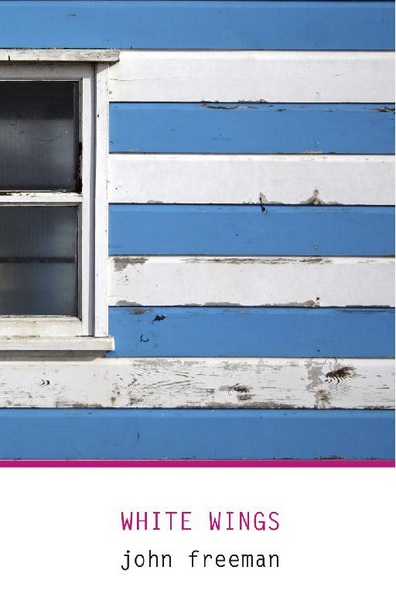
Review of John Freeman's White Wings at Sabotage
I have another review over at Sabotage, this time of John Freeman's fascinating collection White Wings.

Thursday, February 20, 2014

Saturday, February 15, 2014
Why Write Reviews?
As you can see, the title of this blogpost asks a straightforward question. Sadly, the answer may not be so straightforward.
The question arises, however, from a recent review of my own pamphlet Gaud, where the very thoughtful and often sharp-eyed reviewer finds himself puzzled by a poem called 'Serial Killer Review'. This is actually a found poem of sorts, which does not name its various sources - primarily in order to save their blushes. Among other things, it's a parody of poetry reviews, or rather of the kind I saw a lot of when I first started reading poetry magazines: all vague benevolence, no intellectual clout. I wrote that poem quite a while ago, and I have to say that the reviewing I have been encountering recently, especially from young poets and on-line, has much more interesting things to say. That goes for Paul McMenemy's review of Gaud as well, I should add.
Writing for Sabotage, where I also publish reviews, McMenemy wonders if this poem is making an argument 'for the redundancy of all criticism: poems – works of art in general, perhaps – are too personal, perhaps too irrational to be subject to criticism at all, and to attempt to do so is as nonsensical as to attempt to review an act of violence.' My initial reaction to this would be to say that the poem isn't making an argument at all, but is rather being a poem. Unpopular though it is, I believe very strongly that art does not take positions, make arguments, or propose a thesis. This may sound disingenuous from someone who is often told his work is 'political' in some way. But if I wanted to do make an argument, I'd write an essay or a blogpost (like this one) and tell you what I thought.
My preferred way of looking at poetry (and all art) owes much to what Niklas Luhmann had to say on the subject. Namely, that art is not the world, but that it implies the world; it lives from that tension between being something other than reality and at the same time forcing us to see reality in relation to it. So, a poem like 'Serial Killer Review', which is really more of an extended joke, if I'm honest, does at least have the virtue (I hope) of making us ask the question about the value of poetry reviews. It doesn't offer an answer to that question, or even formulate the question in any direct way, but it does attempt to open a space where a number of ideas are in play. The poem itself doesn't really have anything definitive to say on the matter in hand, has no message or judgement to impart.
However, I do have something to say about reviews and the purpose of writing them (this is me speaking now, not my poem). And, it goes like this.
There are five reasons, for me, to spend time writing reviews:
1. To get free books.
Okay, the amount of time and effort you put into a review more or less cancels that argument out, especially when you are doing it for the love. Still, free stuff is still (on some level) free stuff.
2. To shape taste.
This is not a strong point for me, as my taste is pretty omnivorous and I have no doctrinaire commitment to a vision of what 'real' poetry should be or is. Still, if you feel strongly about what is good and want to encourage those poets who share that feeling, and want to encourage readers to share it too, reviewing is one way to try to do that.
3. To be in the right.
We all like to be in the right, I suppose, and reviewing does bestow on the writer a certain position of authority. It's their place to judge, after all - their opinion is what counts. If only until the end of the review.
4. To be part of the scene.
In the increasingly inter-connected world of Twitter, Facebook and so on, reviewing can also be a great way of getting to know people. You review their book, they get in touch and say thank you. That's a nice feeling, too. Although, the awkwardness of encountering someone whose work you've been unpleasant about in the relatively small scene of poetry would be considerable. There is a solution to this, however. I think that there's something interesting to say about most books, even if they are not to my taste. So, the reviewer can talk about those interesting things, even while being critical of other aspects. If that criticism is precise and well-founded, no offence need be taken. Really, it's about meeting the book on its own terms.
5. To be a better reader.
There is a lot to read, let's face it, and not so much time to read it in. Because the books a reviewer receives are generally not ones s/he has chosen, the process forces you to engage with material that can sometimes be quite far from what you would normally buy yourself. If you are taking into account some of what I said in point 4 above, then you will be trying to meet the book on its own terms, trying to see where it is coming from, trying to see whether it lives up to its own ambition (it surely must have some). This means reading, re-reading, a fair amount of travelling around with the book in your bag or walking about the house with it under your arm. The reviewer is trying to make sense of an experience, the experience of reading, which in other circumstances is easy to pass over. We read one book, open another, often we don't give ourselves time to think. Reviewing makes you give yourself that time, and that is a pleasure. As for the audience, the best you can hope is that a person who reads the review seeks out the book and develops their own relationship with it, perhaps even informed by your own experience, and that this relationship will go beyond the superficial as well.
Frankly, what counts for me is point 5 in the list. Maybe that doesn't justify reviewing as a practice, since this only makes it a public service to a limited extent. Still, in a world where so many good books have few readers, the fact that they get a few really attentive ones - the reviewers - seems valuable enough in itself.
The question arises, however, from a recent review of my own pamphlet Gaud, where the very thoughtful and often sharp-eyed reviewer finds himself puzzled by a poem called 'Serial Killer Review'. This is actually a found poem of sorts, which does not name its various sources - primarily in order to save their blushes. Among other things, it's a parody of poetry reviews, or rather of the kind I saw a lot of when I first started reading poetry magazines: all vague benevolence, no intellectual clout. I wrote that poem quite a while ago, and I have to say that the reviewing I have been encountering recently, especially from young poets and on-line, has much more interesting things to say. That goes for Paul McMenemy's review of Gaud as well, I should add.
Writing for Sabotage, where I also publish reviews, McMenemy wonders if this poem is making an argument 'for the redundancy of all criticism: poems – works of art in general, perhaps – are too personal, perhaps too irrational to be subject to criticism at all, and to attempt to do so is as nonsensical as to attempt to review an act of violence.' My initial reaction to this would be to say that the poem isn't making an argument at all, but is rather being a poem. Unpopular though it is, I believe very strongly that art does not take positions, make arguments, or propose a thesis. This may sound disingenuous from someone who is often told his work is 'political' in some way. But if I wanted to do make an argument, I'd write an essay or a blogpost (like this one) and tell you what I thought.
My preferred way of looking at poetry (and all art) owes much to what Niklas Luhmann had to say on the subject. Namely, that art is not the world, but that it implies the world; it lives from that tension between being something other than reality and at the same time forcing us to see reality in relation to it. So, a poem like 'Serial Killer Review', which is really more of an extended joke, if I'm honest, does at least have the virtue (I hope) of making us ask the question about the value of poetry reviews. It doesn't offer an answer to that question, or even formulate the question in any direct way, but it does attempt to open a space where a number of ideas are in play. The poem itself doesn't really have anything definitive to say on the matter in hand, has no message or judgement to impart.
However, I do have something to say about reviews and the purpose of writing them (this is me speaking now, not my poem). And, it goes like this.
There are five reasons, for me, to spend time writing reviews:
1. To get free books.
Okay, the amount of time and effort you put into a review more or less cancels that argument out, especially when you are doing it for the love. Still, free stuff is still (on some level) free stuff.
2. To shape taste.
This is not a strong point for me, as my taste is pretty omnivorous and I have no doctrinaire commitment to a vision of what 'real' poetry should be or is. Still, if you feel strongly about what is good and want to encourage those poets who share that feeling, and want to encourage readers to share it too, reviewing is one way to try to do that.
3. To be in the right.
We all like to be in the right, I suppose, and reviewing does bestow on the writer a certain position of authority. It's their place to judge, after all - their opinion is what counts. If only until the end of the review.
4. To be part of the scene.
In the increasingly inter-connected world of Twitter, Facebook and so on, reviewing can also be a great way of getting to know people. You review their book, they get in touch and say thank you. That's a nice feeling, too. Although, the awkwardness of encountering someone whose work you've been unpleasant about in the relatively small scene of poetry would be considerable. There is a solution to this, however. I think that there's something interesting to say about most books, even if they are not to my taste. So, the reviewer can talk about those interesting things, even while being critical of other aspects. If that criticism is precise and well-founded, no offence need be taken. Really, it's about meeting the book on its own terms.
5. To be a better reader.
There is a lot to read, let's face it, and not so much time to read it in. Because the books a reviewer receives are generally not ones s/he has chosen, the process forces you to engage with material that can sometimes be quite far from what you would normally buy yourself. If you are taking into account some of what I said in point 4 above, then you will be trying to meet the book on its own terms, trying to see where it is coming from, trying to see whether it lives up to its own ambition (it surely must have some). This means reading, re-reading, a fair amount of travelling around with the book in your bag or walking about the house with it under your arm. The reviewer is trying to make sense of an experience, the experience of reading, which in other circumstances is easy to pass over. We read one book, open another, often we don't give ourselves time to think. Reviewing makes you give yourself that time, and that is a pleasure. As for the audience, the best you can hope is that a person who reads the review seeks out the book and develops their own relationship with it, perhaps even informed by your own experience, and that this relationship will go beyond the superficial as well.
Frankly, what counts for me is point 5 in the list. Maybe that doesn't justify reviewing as a practice, since this only makes it a public service to a limited extent. Still, in a world where so many good books have few readers, the fact that they get a few really attentive ones - the reviewers - seems valuable enough in itself.
Sunday, January 12, 2014
Shadowplay
I'm very excited to be attending the première of Jennie Farley's new verse narrative, Shadowplay, on 24 January 2014. Jennie has been working with Deepspace of Cheltenham to create a Gothic winter fantasy of dolls, puppets, abandoned attics and devilish desire. Jennie's rich and precise language leads us into a weird, yet uncannily familiar world, which will appeal to anyone who ever woke up in the middle of the night as a child to find themselves terrified of their own toys, waiting in the darkness. I've had a sneak preview and can't wait to see the full performance with puppets, sound and visual effects.

SHADOW PLAY
A Gothic fairytale for a winter night!
A verse narrative specially written and read by poet Jennie Farley
with a background of Deepspace shadow puppet wizardry
Friday 24 January 2014 7.30 - 9.00 pm
Tickets £6.00 for performance (glass of wine) or £10.00 to include supper at 9.00 pm
Contact Su: su@deepspaceworks.co.uk Call or text 07974 697666
Free car park at S. Edwardʼs Junior School, London Road (opposite Hamilton Street)
DeepspaceWorks, 11 Hamilton Street, Charlton Kings, Cheltenham GL53 8HN
Saturday, January 4, 2014

Tuesday, December 31, 2013
At the End of the Year
This blog is about poetry, often about my own, but not necessarily about me. It isn't a diary or a place to record personal thoughts. At least I don't see it as such. This is probably one of the reasons why I haven't posted anything of significance here for a while. I've been too caught up with myself to say anything worthwhile on other topics - and this is not normally the place I want to write from. The chief reason has been a pleasant one. My pamphlet, Gaud, which was published last year, was nominated for the Michael Marks Award, and was subsequently named the winner at a dinner in the British Library in November. What's more, my publisher, Flarestack, received the award in the publisher category. Since then, I have felt like I ought to write a post about the experience, but haven't really known where to begin.
I've received many congratulations, and I'm immensely grateful for all of those; but I never quite know how to respond. It just seems like enormous luck to win faced with a very strong shortlist, including much better known and more widely published poets than me. Also, as anyone who tries to write poetry for publication and who seeks an audience will know, to get anywhere you need to go through hearing a lot of people telling you your stuff is no good. Feedback is essential, and we all know poets who attend workshops year on year, never getting any better because they brush aside any negative comment. Nobody wants to be that person (I hope!). Rejection and criticism are part of the process, but it is also part of the process to know how to deal with that in a discriminating way.
I have quite a number of poems in print that have at one time or another received pretty short shrift from other quarters; not that their being in print is a seal of quality, but it does at least demonstrate how widely even well-informed views can diverge. Reading reviews of Gaud has brought this point home even more forcefully: some reviewers are positive, some aggressively negative, others slightly bemused. Now, I could take the Michael Marks Award as finally blowing all of these views (except the positive ones, of course) out of the water. But somehow it doesn't. The doubt about my own work remains, and I suppose always will remain.
At another prize-giving event not along ago (where I had a poem commended), the judge reminded us that we shouldn't get hung up on prizes, which could distract us from the poetry itself. The judge in question has won or been nominated for just about every one of the most prestigious and lucrative prizes available in the UK. So, a little, cynical voice inside me thought, 'easy for you to say!' But she was right, of course. It would be great if winning the Michael Marks Award (which still seems entirely unreal to me) meant that now the whole world loved what I did, and that masterpiece after masterpiece just flowed from my pen, only to be snapped up by every journal worth its salt. Sadly, no prize, no recognition, no praise can do that. I will still mostly write mediocre to bad poems, occasionally a good or very good one, maybe before I die at least one excellent one.
However, what winning the Flarestack pamphlet prize and now the Michael Marks Award has given me is a sense that my poetry could be good enough to make it worth my carrying on. I would always write for myself, but writing for others is a different matter, and recognition by the judges is the best encouragement I could have not to give up on that goal. That is the thing I'm most grateful for. Also, the award has already opened some doors: I'm in discussions with a publisher I really like about a first collection and my work will be included in a forthcoming anthology alongside poets whose work I admire. These are exciting opportunities, and the Michael Marks Award allows me to feel that I could produce some poetry that would be worthy of them. That's an invigorating, if slightly daunting, way to end 2013.
I've received many congratulations, and I'm immensely grateful for all of those; but I never quite know how to respond. It just seems like enormous luck to win faced with a very strong shortlist, including much better known and more widely published poets than me. Also, as anyone who tries to write poetry for publication and who seeks an audience will know, to get anywhere you need to go through hearing a lot of people telling you your stuff is no good. Feedback is essential, and we all know poets who attend workshops year on year, never getting any better because they brush aside any negative comment. Nobody wants to be that person (I hope!). Rejection and criticism are part of the process, but it is also part of the process to know how to deal with that in a discriminating way.
I have quite a number of poems in print that have at one time or another received pretty short shrift from other quarters; not that their being in print is a seal of quality, but it does at least demonstrate how widely even well-informed views can diverge. Reading reviews of Gaud has brought this point home even more forcefully: some reviewers are positive, some aggressively negative, others slightly bemused. Now, I could take the Michael Marks Award as finally blowing all of these views (except the positive ones, of course) out of the water. But somehow it doesn't. The doubt about my own work remains, and I suppose always will remain.
At another prize-giving event not along ago (where I had a poem commended), the judge reminded us that we shouldn't get hung up on prizes, which could distract us from the poetry itself. The judge in question has won or been nominated for just about every one of the most prestigious and lucrative prizes available in the UK. So, a little, cynical voice inside me thought, 'easy for you to say!' But she was right, of course. It would be great if winning the Michael Marks Award (which still seems entirely unreal to me) meant that now the whole world loved what I did, and that masterpiece after masterpiece just flowed from my pen, only to be snapped up by every journal worth its salt. Sadly, no prize, no recognition, no praise can do that. I will still mostly write mediocre to bad poems, occasionally a good or very good one, maybe before I die at least one excellent one.
However, what winning the Flarestack pamphlet prize and now the Michael Marks Award has given me is a sense that my poetry could be good enough to make it worth my carrying on. I would always write for myself, but writing for others is a different matter, and recognition by the judges is the best encouragement I could have not to give up on that goal. That is the thing I'm most grateful for. Also, the award has already opened some doors: I'm in discussions with a publisher I really like about a first collection and my work will be included in a forthcoming anthology alongside poets whose work I admire. These are exciting opportunities, and the Michael Marks Award allows me to feel that I could produce some poetry that would be worthy of them. That's an invigorating, if slightly daunting, way to end 2013.
Tuesday, October 29, 2013
Return to the Echoing Gallery
For those of you in Bristol who missed the launch of Redcliffe Press' beautifully produced anthology The Echoing Gallery, edited by Rachael Boast, there's another chance to hear some of the poems being read on 29 November - full details below.

Saturday, September 28, 2013
Top Ten Autumn Poems
If the sign of spring is the first cuckoo, for me the sign of autumn is hearing someone - usually someone just stepping outside into a foggy day with golden leaves swirling across the pavement - quote Keats' 'season of mists and mellow fruitfulness'. Like 'now is the winter of our discontent' or 'shall I compare thee to a summer's day', these lines are no so much part of the English language that they survive quite happily without the poem they introduce. Autumn provides a ready-made metaphor for the end of youth, the process of ageing and intimations of wintery death on the horizon. And yet, as in Keats' lines, autumn is also a time of plenty and harvest. So, my selection of favourite autumn poems (in no particular order) may be downbeat, but there is always some comfort to be found.
I'd love to discover some of your favourites - feel free to leave a comment!
 |
| Image: Wikipedia |
Thomas is the 20th century poet of the English countryside, but the landscapes he loved were never only beautiful, shadowed as they were by existential and political concerns (for instance, in 'The Team's Head Brass'). Here, the observer is struck by the beauty around him, but also experiences a melancholy born of his own awareness of his difference from the rest of nature, that difference which is a product of human consciousness. The irony is, of course, that the beauty of nature could not be experienced without that human point of view.
A wonderfully musical poem which manages to make the mountain of winter (and, metaphorically, death) sound like a relief from the stiffness and decay of the autumnal world. It certainly seems more of a comfort than the narrator's fellow human beings, growing cold as the nature around them.
The cranefly of the summer becomes an ungainly, unlikely creature in Hughes' description, like a species about to be made extinct by an environment which has changed without leaving time for it to adapt. The 'vast empire' of nature is indifferent to her fate.
Elizabeth Jennings says that 'every season is a kind / Of rich nostalgia' - as in most things, she is right.
Skilfully using the sestina form to suggest a moment of stasis, Bishop captures autumn as a time of waiting - the cold felt by the grandmother is an intimation of mortality, while the child waits for the flower bed she has drawn to bloom in an anticipated spring.
Autumn as a desolation that only May can redeem.
Frost beautifully juxtaposes autumn's twin themes of decay and plenty - here the narrator is weary from harvesting so much richness, and that weariness suggests that he may not be able to enjoy the fruits of his labour for too much longer. The pane of ice from the water trough, which he holds up to observe the autumn world, is a lovely metaphor for his melancholy point of view.
A much more vital and life-affirming take on autumn here, as we might well expect from Redgrove, who is never a glum poet - the poetic imagination gives the changing season an energy which charges the whole of the natural world with erotic expectation.
A lovely poem by Shuttle for her late husband, Peter Redgrove. Here autumn is a moment of loss and loneliness. It's remarkable how much Shuttle is able to achieve with such economy - a real contrast to Redgrove's effervescent style.
If there's one thing I personally try to refrain from, it's commenting on or attempting to interpret Stevens' poetry. I just read it. A kind of desolate music in this exquisite poem.
Sunday, September 22, 2013
Autumn Dates
After a pleasant summer lull in poetry goings-on, I have a few appearances coming up in September and October.
On Sunday 22 September, I'll be in Bromsgrove for the prize-giving ceremony for the Ralph Ockendon Poetry Prize (http://ralphockendonpoetrycompetition.com/). My poem 'Lenin at the Music Hall' is nominated for the prize. The event takes place at 3.00 p.m. at the Artrix Theatre. The prize has been judged by Sean O'Brien.
 On 26 September, I'll be in Cirencester with my good friend Jennie Farley, performing our 'Counterpoint' programme at the Brewery Arts Centre, from 7.00 p.m. Further details here. Jennie and I have put together a wide-ranging performance of about 40 minutes, with reflections on love and relationships, taking in myths, cross-dressing and superheroes along the way. There's an open mic sessions before our reading, so the audience can share their poems, too.
On 2 October, I'll be reading my poem 'Leda' at the launch of The Echoing Gallery, an anthology of ekphrastic poems by writers based in Bristol. The reading will feature 22 poets and live music. It starts at 7.30pm at The Orangery, Goldney Hall, Lower Clifton Hill, Clifton, Bristol BS8 1BH. Further details on the anthology can be found here.
On 5 October, I'll be reading my poem 'To the Harvesters of Ambergris', which was commended in this year's Battered Moons poetry competition, judged by Alice Oswald and Cristina Newton. You can read all of the winning and commended poems here. Further details of the event can be found here. The chief attraction of the evening will be to hear Alice Oswald read. I'm very much looking forward to it. Tickets seem to be selling quickly, but can be booked here.
On 13 October, I'll be reading my poem 'Song of His Suterkin Brother' at an event for the poets nominated for this year's Wells Festival of Literature poetry prize. The even begins at 2.30 p.m., but details are not yet on the web. I'll update in due course.
On Sunday 22 September, I'll be in Bromsgrove for the prize-giving ceremony for the Ralph Ockendon Poetry Prize (http://ralphockendonpoetrycompetition.com/). My poem 'Lenin at the Music Hall' is nominated for the prize. The event takes place at 3.00 p.m. at the Artrix Theatre. The prize has been judged by Sean O'Brien.
On 26 September, I'll be in Cirencester with my good friend Jennie Farley, performing our 'Counterpoint' programme at the Brewery Arts Centre, from 7.00 p.m. Further details here. Jennie and I have put together a wide-ranging performance of about 40 minutes, with reflections on love and relationships, taking in myths, cross-dressing and superheroes along the way. There's an open mic sessions before our reading, so the audience can share their poems, too.On 2 October, I'll be reading my poem 'Leda' at the launch of The Echoing Gallery, an anthology of ekphrastic poems by writers based in Bristol. The reading will feature 22 poets and live music. It starts at 7.30pm at The Orangery, Goldney Hall, Lower Clifton Hill, Clifton, Bristol BS8 1BH. Further details on the anthology can be found here.
On 5 October, I'll be reading my poem 'To the Harvesters of Ambergris', which was commended in this year's Battered Moons poetry competition, judged by Alice Oswald and Cristina Newton. You can read all of the winning and commended poems here. Further details of the event can be found here. The chief attraction of the evening will be to hear Alice Oswald read. I'm very much looking forward to it. Tickets seem to be selling quickly, but can be booked here.
On 13 October, I'll be reading my poem 'Song of His Suterkin Brother' at an event for the poets nominated for this year's Wells Festival of Literature poetry prize. The even begins at 2.30 p.m., but details are not yet on the web. I'll update in due course.
Wednesday, September 11, 2013
Constraint
As noted below, I haven't been blogging much recently, faced with an increasingly tricky work-life-writing balance. Writers who don't do it for a living often complain that they lack the freedom (i.e. the time) to write, but I wonder if I would get any more written if I had more time to do it. After all, what I have written has happened in amongst everything else that I do. What would really happen if that was taken away?
 I've been thinking a lot about constraint recently, having read a new book of two essays on the Oulipo movement: The End of Oulipo by Lauren Elkin and Scott Esposito. It's quite a curious book, polemic at times, and less about the movement and its poetics than about particular individuals, but still worth reading as a reminder of the fascination which this group of writers, founded in Paris is 1960, can still exert. In the English-speaking world, the prose works of Oulipo writers are perhaps better known, including those of Raymond Queneau, Italo Calvino and Georges Perec, but their approach to literature is equally applicable to poetry. The Ouvroir de littérature potentielle or Workshop of Potential Literature (Oulipo for short) proposes an approach to writing which emphasises the imposition of artificial and often complex constraints on the text to be produced. The resulting work represents a possible outcome of the experiment conducted by the author, but only one of the many potential outcomes. And, indeed, the experiment can be repeated again and again within the same text to demonstrate the many possible versions that might be produced. So, for example, Queneau's Exercises in Style retells the same banal anecdote over and over again in a variety of literary styles. A recent practitioner of Oulipian techniques in poetry, although not a member of the group, is Christian Bok, whose collection of prose poems Eunoia contains five sections, each written using only words containing only one of the vowels. (There's an excellent essay on Bok's work here, by the way)
While these extreme forms of constraint produce fascinating - and often very witty - results, I wonder to what extent Oulipo, at least in poetry, is in fact at one end of a spectrum along which all poetry operates. Really, there is no such thing as 'free verse' - poems tend to invent their own conventions, and every poet is constrained to some extent, even if only by the practice of line breaks and stanzas which we all recognise as making the text on the page seem like a poem.
I've been thinking a lot about constraint recently, having read a new book of two essays on the Oulipo movement: The End of Oulipo by Lauren Elkin and Scott Esposito. It's quite a curious book, polemic at times, and less about the movement and its poetics than about particular individuals, but still worth reading as a reminder of the fascination which this group of writers, founded in Paris is 1960, can still exert. In the English-speaking world, the prose works of Oulipo writers are perhaps better known, including those of Raymond Queneau, Italo Calvino and Georges Perec, but their approach to literature is equally applicable to poetry. The Ouvroir de littérature potentielle or Workshop of Potential Literature (Oulipo for short) proposes an approach to writing which emphasises the imposition of artificial and often complex constraints on the text to be produced. The resulting work represents a possible outcome of the experiment conducted by the author, but only one of the many potential outcomes. And, indeed, the experiment can be repeated again and again within the same text to demonstrate the many possible versions that might be produced. So, for example, Queneau's Exercises in Style retells the same banal anecdote over and over again in a variety of literary styles. A recent practitioner of Oulipian techniques in poetry, although not a member of the group, is Christian Bok, whose collection of prose poems Eunoia contains five sections, each written using only words containing only one of the vowels. (There's an excellent essay on Bok's work here, by the way) |
| Photo: D. Clarke |
When I look around at contemporary poetry, I see a lot of poets setting themselves formal challenges. Michael Symmons Roberts recent Drysalter, for example, consists of 150 15-line poems. As far as I'm aware, there is no special reason for adopting these parameters, but - once accepted - they allow Symmons Roberts to explore a range of formal possibilities within the space of those 15 lines. Only by limiting himself is he able to discover something new. Matthew Caley's Apparently (2010) is a very different collection, but takes as its starting point the premiss that each poem will either begin or end with the word 'apparently'. This gives the whole collection a speculative, playful atmosphere, as if everything were in the subjunctive - which, in poetry at least, I suppose it always is. There's more game-playing of various kinds to be found in Jon Stone's excellent School of Forgery (2012), much of it with distinctly Oulipan tendencies.
But even poetry which does not foreground its formal constraint so openly cannot escape the fact that its artifice is central to its own production. I have often heard the view expressed that poetic form should somehow melt into the background or become natural-seeming. Of course, we have all heard and read bad poetry which is written only to make the rhyme or meet the requirements of the chosen metre, but these poor examples should not distract us from the potential of formal constraint, of whatever kind, to challenge the poet to explore new terrain - form is not just something the poem is poured into, but a factor in its production, opening up new potential for expression.
Subscribe to:
Posts (Atom)